Show with Kofi
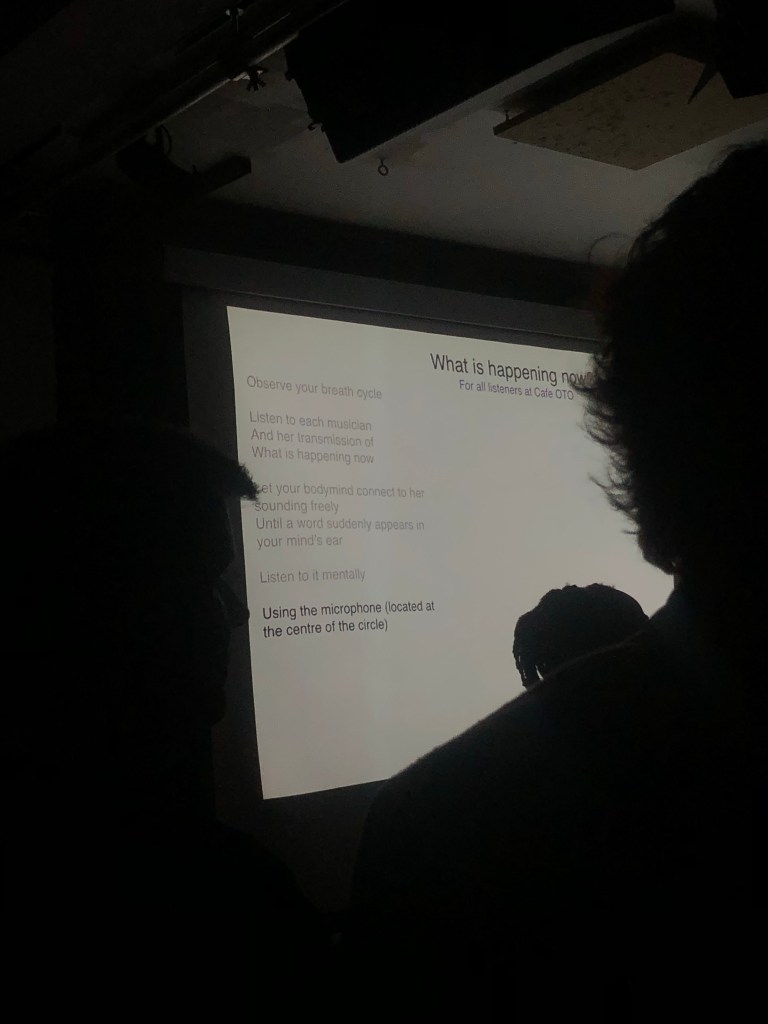
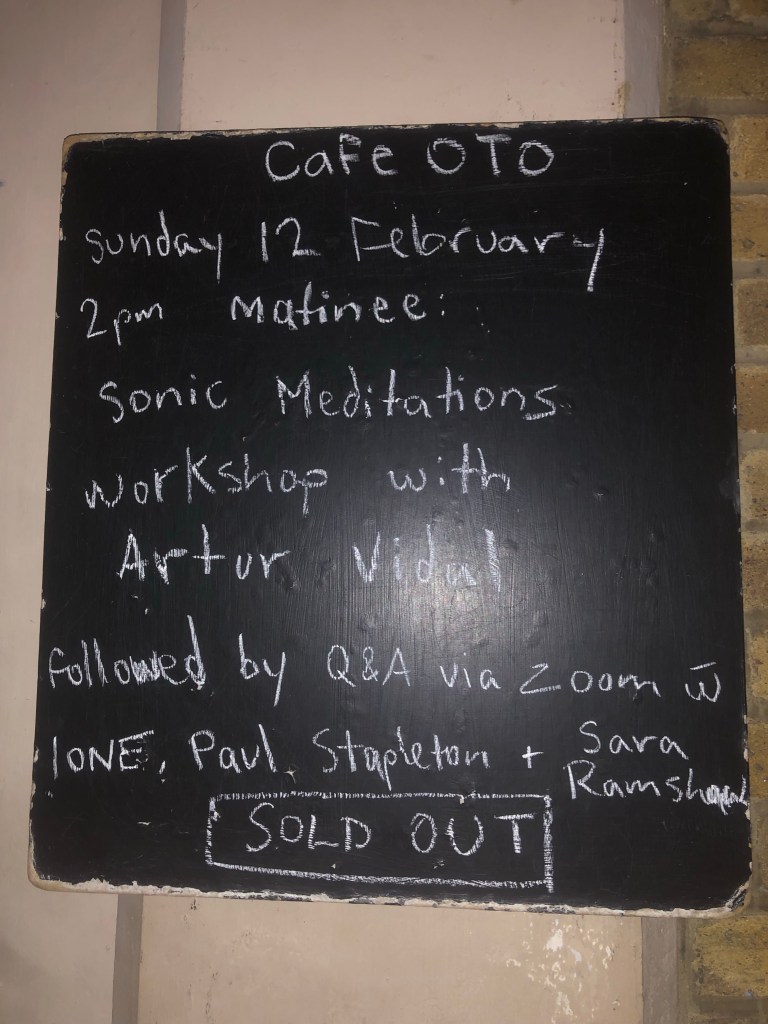
‘What is Happening Now’ (50th anniversary of sonic meditation) at Cafeoto
Audience participation in art, certain art, I find problematic. It alienates as much as it engages. The words chosen may have been perfect for them, but completely wrong for me, ‘storm’ was said when I was thinking ‘sex’, ‘mysticism’ was ‘Cymru’. Individuals are so complicated and the relations trying to be developed are so quick and fleeting, while some may engage, again, others are pushed away. (A problem with spoken words and writing in art). Another issue is ego, the open nature of audience participation and improvisation allows for those who would happily push themselves to the front to do so. Despite there being clear rules about the nature of how the audience participates some did not adhere. While the artist may want this in some cases, this personal response, projected onto all listeners and participants may negatively affect the work. Art works are ‘individual’ responses to shared culture, then a individual response to that with the viewer. (A1 to B to A2) the viewer’s response is unique to themselves, while still relating to the artist. This process is warped with participation. Suddenly A2 changes B, changing A1 and all other outcomes of the process of individuation.
Having said all this, looking at performance work which relies on interaction doesn’t seem to pose the same problems. If I look at works such as Yoko’s … when the audience is asked to participate, what we see isn’t a collective participation. For brief moments an audience member engages with the subject. Changing the process, then leaving their mark for the next viewer-artist to engage with. There is no way this person can push themselves to the centre, they may engage more harshly or, in Yoko’s case, remove more cloth. But they are never able to force other’s decisions and personal responses’. Unlike with collective participation where people can force others out of engaging by being louder or ignoring parameters etc.
This could just as easily be jealous ramblings, not valid criticism. When laughter erupted it broke any connection I had with the piece, when the person behind me started scatting and beatboxing it distracted me. There was something that others could feel and I could not and that made it next to impossible to listen deeply at points. The first two movements (by GLORIA DAMJIAN and JANE WANG respectively) I felt engaged with, I felt how I often do with good noise. But about halfway through Viv’s section, when the laughter started, I felt completely disengaged.
I think most of what I’ve said can be discounted purely for the fact I’m not engaged with this scene nearly enough and my own personal dislike of language in art and music.
 The Craxford Snelling Workshop
Leave a comment